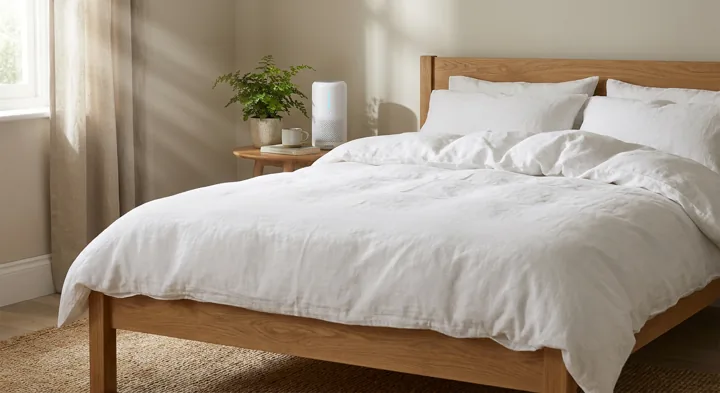
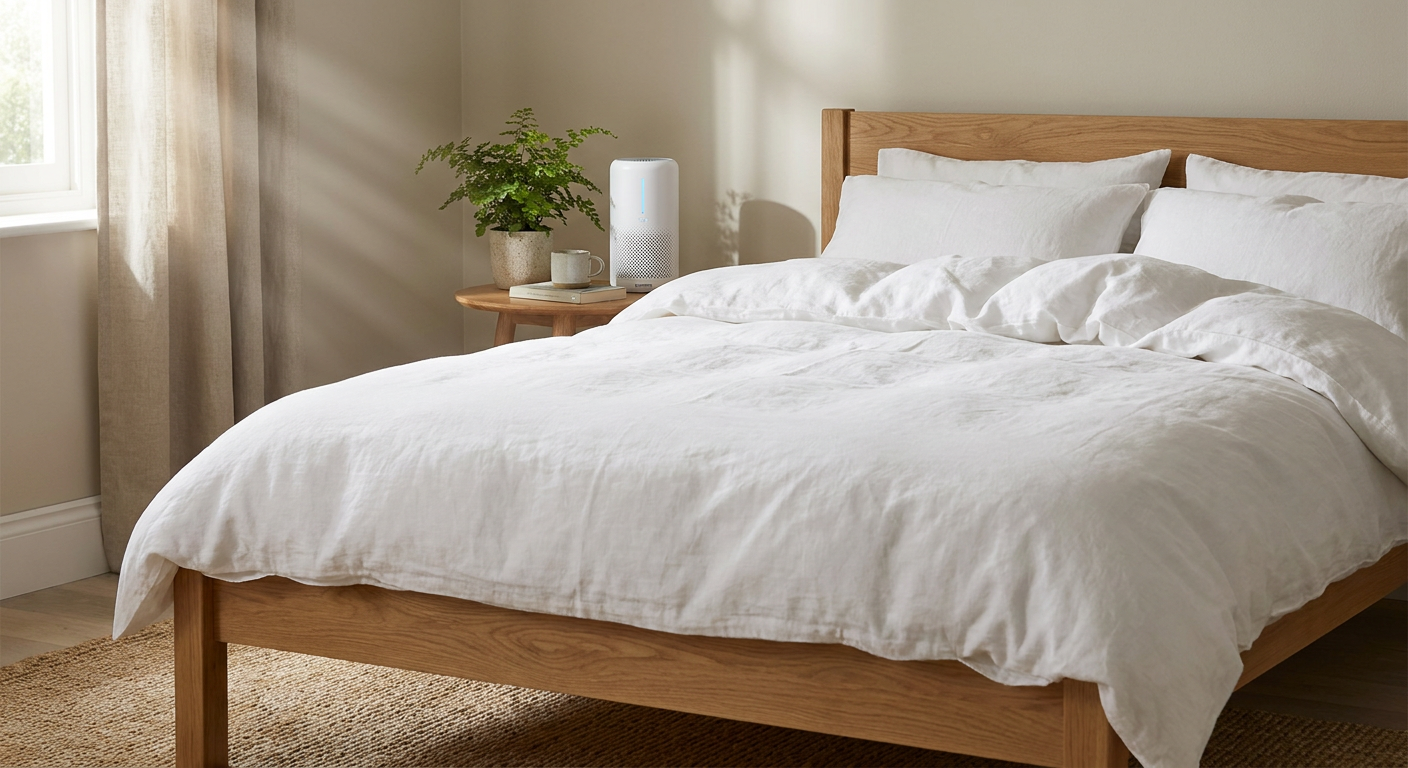
The bedroom is a space you use for hours at a time. Thinking about its ventilation, cleaning routine and any persistent damp is a practical part of looking after the room.
What happens to air quality while you sleep
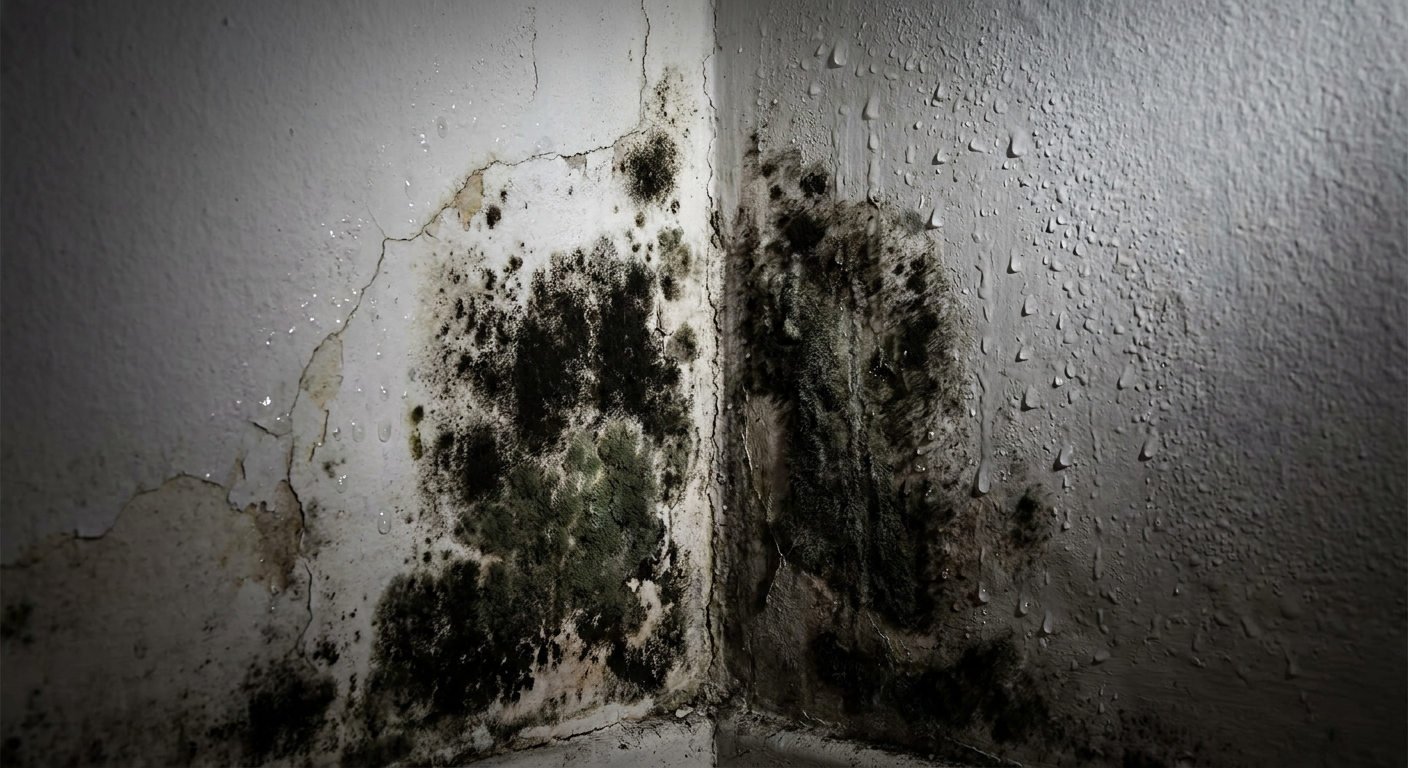
A bedroom’s air changes with its use, occupancy and ventilation. Notice persistent stuffiness, condensation or odours and investigate what may be contributing to them. A purifier is not a replacement for fresh-air ventilation.
Consider the room as a whole: furnishings, cleaning products, bedding and ventilation. Avoid making a purchase before you understand what you want it to do.
Keep expectations realistic
A purifier is not a sleep treatment, and a change in sleep does not on its own demonstrate a change in air quality. If sleep problems persist, seek appropriate advice rather than relying on equipment to resolve them.
Practical improvements
- Investigate persistent condensation or damp.
- Keep ventilation paths and extractor systems working as intended.
- Follow fabric care guidance for bedding and keep a regular cleaning routine.
- Check documented noise levels at the setting you expect to use.
- Keep equipment positioned and maintained according to its manual.
Compare product technologies carefully. Hepa Room is a HEPA filtration model; PureAir50 uses activated oxygen and ionisation. These are different approaches, and a quiet unit is not automatically suitable for overnight use in an occupied room.